
Note: This story discusses emotional abuse. Some parts may be hard to read.
I have told this story to almost no one. It feels too heavy to drop into a normal conversation. I can talk about a bad job or a painful breakup, but this one stays locked in my chest. It is my sibling betrayal story. Writing it down is a way to survive it. I used to think betrayal between siblings only happened in old stories. Then my older sister taught me how wrong I was.
Just because someone has siblings does not mean they have a good relationship with them. I used to believe a sister was a built-in safe person. Mine taught me otherwise.
My sister Rachel is older than me by a few years. In childhood, she was bossy, brave, and famously quick to cry when she did not get her way. We shared a bedroom until I was nine, and then we shared secrets until college. She knew my first crush. I knew the sound of her crying in the dark. I believed that kind of history could not be undone.
Rachel also had a sharp edge. She could not let me have something that she did not have. If I brought home a good report card, hers was better. If I found a group of friends, she found a way to become the center of it. I told myself this was just how sisters were. I adjusted. I made room for her light by standing in her shadow.
Our family was small. Dad, Rachel, and me. Rachel moved out early and built a life that looked perfect from the outside. I stayed closer to home. Her choices were rarely questioned. Mine were always up for discussion. That pattern followed us into adulthood, and I was too used to it to see what it would cost me.
When Dad got sick, I rearranged my days around his appointments. Rachel visited when she could, but her visits got shorter and rarer. I did not keep a list. I did not draw a line between her effort and mine. That would have felt like a betrayal of its own, a way of keeping score while he needed us to work together.
In the last months, I was the one sleeping on his couch and measuring out his medicine. Rachel spoke to him by phone. She seemed angry at me for being there, although she never said so directly. I remember her saying something like, “You always have to be the one who saves him.” I told myself she was grieving. I told myself I would make it easier for her. I said yes when I should have asked more questions.
After Dad died, I felt hollow. There is a specific emptiness that comes after weeks of being strong. I thought we would grieve together. That did not happen. Rachel went quiet. At the funeral, she barely looked at me. I assumed she needed space. I gave it to her. I would spend the next year learning that silence was not space. It was distance she was creating on purpose.
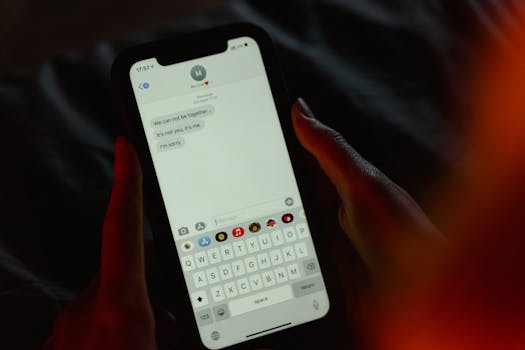
I found out where we stood in a single text message. It came from Rachel, late on a Tuesday, with no greeting and no softness. She wrote that she needed to go through Dad’s house before I took anything else from it. I read the words again and again. I had not taken anything. I had not packed a single box without her. I had waited for her to come help, the way I always did.
I called her. She let it ring until voicemail. I texted back slowly, carefully. I told her we could go through the house together. I told her Dad would have wanted that. Her answer looked like a wall: “Don’t start.”
A cousin reached out to me later that week. She wrote that she was sorry about Dad, and then she asked why I had kept Rachel away. I stared at the question for a long time. Kept her away? Rachel lived hours away and made her own choices. On the phone, my cousin told me that Rachel had been telling relatives a story. In the story, I wanted Dad to myself. I made Rachel feel unwelcome. I had turned Dad against her.
My first instinct was denial. It was not true. It was not even close to true. But I learned something important: a lie can travel faster than the truth when the liar speaks with confidence. Rachel had been planting this version for months, quietly and piece by piece, while I was too busy taking care of Dad to notice.
I thought about defending myself to everyone. I drafted messages and deleted them. In the end, I only asked Rachel to meet me, because I still believed we could fix it if we sat across a table.
When I finally got Rachel on the phone, she did not sound like my sister. She sounded rehearsed. The story she told me was smooth and complete. She talked about how she had tried to visit, but I always had an excuse. She said Dad had told her he was scared of me. That sentence made me drop the phone. Dad had said no such thing. I was the person he asked for when the pain got bad.
I tried to show her the truth. I played back the dates in my head: who drove him, who sat with him, who held him when he cried. Rachel did not hear any of it. She said I was playing the victim. Then she used words I still cannot shake: “Maybe if you had a life of your own, you would not need to steal mine.” A sibling’s betrayal is not usually a single violent act. It is a slow, quiet cut, delivered with the calm of someone who has already decided the story belongs to her.
That phone call ended my childhood. It ended the idea that love between siblings is unconditional. For weeks I walked around waiting for it to make sense. I kept rehearsing conversations in my head, but I could not find a version where Rachel looked at me the way she used to. She had stopped seeing me as her sister long before I knew anything was wrong.
The hardest part came after the initial shock. People in our family began to say things like, “Why can’t you let it go?” They told me to be the bigger person. They wanted peace. I noticed that no one gave Rachel that lecture. No one asked her to explain her story. No one told her to call me or apologize. The message was clear. Because I was the one still hurting, I was the one expected to heal quietly.
I began to understand a painful pattern. Sometimes the neglected ones become the villains in someone else’s version of the story. I was Rachel’s supporting character. In her narrative, I existed to be eclipsed, to stay smaller. When I stepped out of that role, I became a threat. A threat is easier to call selfish than to treat like a person.
The betrayal did not end with one phone call. It followed me into ordinary moments. A family group chat at the holidays. A photograph of Rachel with her children that appeared on my phone because someone tagged me. The sudden sound of her name in a conversation. Each time my chest tightened, and I thought: how can someone who knows you best choose to break you?
I went through a long phase of checking myself. Was I too sensitive? Did I make Dad’s illness about me? Did I take more than my share? This is what emotional abuse does. It makes the victim audit their own memory. I started keeping a list of the real facts in a note on my phone. It sounds strange, but I needed proof of my own sanity. The list said simple things. I was there. I did not keep her away. I did not say those words. I asked her to come. I was not the one who walked away.
I cannot control the story Rachel tells. I cannot force her to remember the truth or to love me again. What I can do is stop trying to win an argument where the other person never agreed to tell the truth. Some days that feels weak. Other days it feels like the only strength I have left.
The word forgiveness sits on my tongue like a stone. I am not ready to swallow it. For now, forgiveness looks different. It looks like letting my body relax in a room where no one mentions her. It looks like saying no to conversations that are really traps. It looks like telling my story to someone who sees me while I tell it.
I tell myself that grieving my sister is part of grieving my father. A family that used to feel safe now has a hole in it. I cannot be the one who rushes to fill that hole alone. Maybe that is fine.
I do not want to erase Rachel from my history. I just want my life back, the version of me that she no longer gets to edit. That starts with this. I tell the truth, and I do not ask her permission to remember.